The Factory Behind the Fake Bargain
How a global criminal industry turned online shopping into a trap — and why Germany keeps ending up in the crosshairs

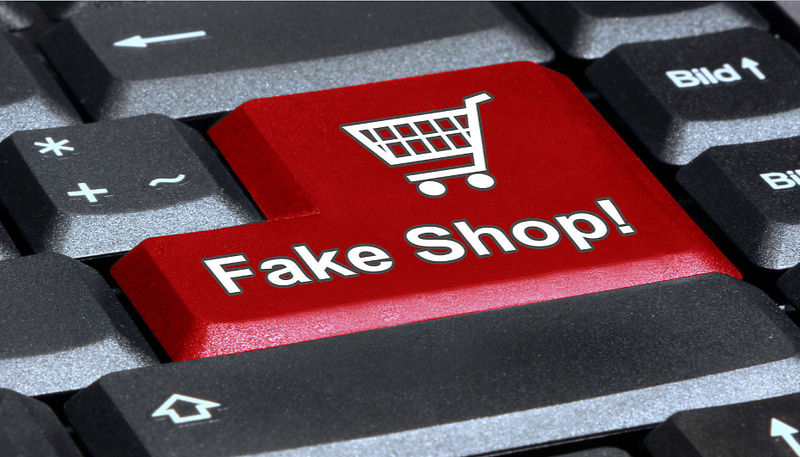
How a global criminal industry turned online shopping into a trap — and why Germany keeps ending up in the crosshairs
You found it. The Adidas sneakers you’ve been watching for months, finally at a price that makes sense. The website looks right. There’s a padlock in the browser bar. There’s a legal notice, a returns policy, a chat button in the corner. You pay. You get a confirmation email.
Then nothing arrives.
Weeks later, checking your bank statement, you notice a second charge you didn’t make — somewhere you’ve never shopped. That’s when it clicks. The checkout page wasn’t just fake. It was a trap inside a trap. While you were placing your order, someone else was quietly lifting your card details.
Welcome to the fake shop industry.
This Is Not Small-Time Fraud
It’s tempting to picture fake online shops as opportunistic scammers, small operations running on luck and naivety. That picture is wrong by several orders of magnitude.
In May 2024, German cybersecurity firm Security Research Labs (SRLabs) published an investigation into a criminal network they named BogusBazaar. What they found was industrial in every sense of the word.
Over the previous three years, BogusBazaar had operated more than 75,000 fraudulent webshops across the internet — simultaneously. At its peak, the network was processing fake orders across 22,500 active domains. It had claimed more than 850,000 victims across the United States, the United Kingdom, France, Australia, and Western Europe, and had attempted to process over $50 million in fraudulent transactions.
It wasn’t a gang. It was a franchise.
The operation ran on an infrastructure-as-a-service model — a core team in China developed and maintained the back-end software, the WordPress plugins, the payment routing systems, and the automation tools. A decentralised network of “franchisees” then rented access to that infrastructure and ran day-to-day shop operations on top of it. Think of it less like a criminal organisation and more like a malicious version of Shopify — complete with onboarding, quality assurance, and support for operators who needed help setting up their storefronts.
Each server in the network typically hosted around 200 fake shops simultaneously. Some hosted over 500. Shops were built on expired domains — previously legitimate websites that retained their Google reputation and search rankings, meaning the fake storefronts appeared right alongside real retailers in organic search results. No ad spend required.
The Two-For-One Crime
What makes BogusBazaar — and operations like it — particularly damaging is that they don’t just steal money. They steal money and payment data, often from the same victim in the same transaction.
Here’s how it works. You arrive at a fake shop (via a Google result, a social media ad, or a smishing text pretending to be DHL — often also via ads that google makes money from and therefore turns a blind eye to, google, facebook, and the likes, do not care about your loss). You add something to your cart. You proceed to checkout. The payment page you’re looking at isn’t connected to any real processor — it’s a spoofed interface collecting your card number, expiry date, and CVV in real time.
Then it shows you an error. “Payment unsuccessful. Please try again.”
You’re redirected to a real payment gateway, where your payment goes through. You get a confirmation. You wait for a delivery that never comes. Meanwhile, your card details have already been packaged and sold on a dark web carding forum, where someone else will use them for a purchase you’ll dispute in three months’ time wondering how it happened.
SRLabs documented this double-chain attack being used repeatedly on the same victims. One crime, two payouts.
The Global Landscape: A Market That Has Gone Industrial
BogusBazaar is the most documented case, but it is nowhere near the only one.
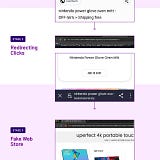
A parallel operation tracked by HUMAN Security’s Satori Threat Intelligence team — dubbed Phish ’n’ Ships — infected more than 1,000 legitimate websites to create fake product listings, then funnelled traffic to 121 purpose-built fake stores. It ran for five years and caused losses estimated in the tens of millions of dollars before researchers disrupted it in late 2024.
Recorded Future’s Payment Fraud Intelligence team documented a separate network in May 2025: 71 fraudulent domains impersonating German discount retailer Lidl, all linked to 12 shared merchant accounts registered under shell company names like “AKRU KERAMIK GMBH” and “MYCOZYBABIES.” Unlike classic phishing, these sites didn’t just collect card data via fake forms — they actually processed real payments through compromised merchant accounts, guaranteeing card compromise on every transaction.

These aren’t isolated incidents. They’re evidence of a mature, professionalised criminal ecosystem with clearly defined roles:
- Phishing kit vendors sell ready-made shop templates on dark web markets
- Malvertising services place fraudulent ads on Google and Meta at scale
- Merchant account brokers supply pre-approved payment processing infrastructure
- Money mule recruiters enlist individuals to move money across borders
- Dark web card shops buy harvested card data and resell it for secondary fraud
The 2024 Payment Fraud Intelligence Report from Recorded Future documented 269 million stolen card records posted across dark and clear web platforms in a single year, with Magecart e-skimmer infections tripling due to widespread web vulnerabilities. The Global Anti-Scam Alliance (GASA), surveying 46,000 adults across 42 countries, estimated global scam losses in 2025 at $442 billion.
Artificial intelligence has begun accelerating all of this. A March 2025 controlled study found that AI-generated phishing content outperformed human-crafted phishing by 24 percent in effectiveness. Generative AI eliminates the grammatical errors and awkward translations that once served as reliable red flags. Deep fake video advertisements — including fabricated endorsements from real politicians and celebrities — are now used routinely to drive traffic to fraudulent investment sites and shops. Tools like FraudGPT and WormGPT, purpose-built for criminal use and available on dark web markets, put sophisticated fraud automation within reach of anyone willing to pay a subscription fee.
So Why Does Germany Keep Coming Up?
Open any recent report on European e-commerce fraud and Germany appears with uncomfortable frequency. The Federation of German Consumer Organisations (VZBV) reported in November 2025 that nearly one in eight German online shoppers had been scammed by a fake shop in the previous two years. Consumer protection agencies recorded more than 10,000 complaints in 2024 alone — a 47 percent increase from the year before — with a further 8,000 filed in just the first three quarters of 2025. A separate survey by the eco Association found that approximately 30 percent of Germans have fallen victim to a fake shop at some point.

The question worth asking honestly is: is Germany actually disproportionately targeted, or does it just have better consumer complaint infrastructure than most countries?
The answer, it turns out, is both — but the targeting is real, and it’s deliberate.
Germany is the sixth-largest e-commerce market in the world. Its online retail revenue was estimated at $100.6 billion in 2024 and is projected to hit $142 billion by 2029. There are approximately 47.68 million e-commerce users in the country — 66 percent of the population — and 64 percent of them bought clothing online in the past year, with shoes, electronics, and bicycles not far behind. These are precisely the high-demand, brand-name categories that fake shop operators build their storefronts around.
But size alone doesn’t explain it. Several structural features of German consumer culture create specific vulnerabilities that sophisticated fraud networks have learned to exploit.
The trust architecture is unusually legible — and therefore unusually forgeable. German e-commerce has, over decades, developed a set of standardised trust signals that consumers have been trained to look for: the Impressum (a legally required business disclosure page), the Trusted Shops certification badge, the .de domain extension, the PayPal logo, the SSL padlock. These signals are so consistent and so expected that they have become a checklist in consumers’ minds. Fake shop operators have catalogued that checklist and now reproduce every item on it systematically. Fraudulent Impressum pages are generated with plausible but fictitious German business addresses. Trusted Shops badges link to fake verification pages. SSL certificates are obtained instantly and for free through Let’s Encrypt. The very standardisation that was supposed to protect German consumers has become a blueprint for deceiving them.
The dominant payment methods offer limited recourse. Germany is notable in Europe for the prevalence of Vorkasse — advance bank transfer payment — as a legitimate and widely accepted checkout option. Unlike credit card payments, which carry chargeback rights, a SEPA bank transfer once processed has a recovery window of roughly one to two hours before the money is essentially gone. Fake shops that accept only Vorkasse are operating a near-perfect extraction mechanism: payment is immediate, irrevocable, and arrives before the victim has any reason to be suspicious. By the time the complaint is filed, the shop has disappeared and the funds have moved through a mule account.
The cybercrime clearance rate creates impunity. Germany’s clearance rate for cybercrime stands at approximately 32 percent — meaning nearly seven out of ten cybercrime cases go unsolved. The BKA (Federal Criminal Police Office) has itself acknowledged that many identified perpetrators “are often tolerated or protected by their countries of residence,” a diplomatic way of noting that operators based in China or certain Eastern European states face virtually no extradition risk. SRLabs analyst Matthias Marx, reflecting on why BogusBazaar operated for years without law enforcement disruption, noted that because individual fraud amounts are relatively small, “the fraudsters seem to have managed to evade the attention of law enforcement authorities despite earning millions.” Volume is the strategy precisely because volume keeps each individual case below the threshold of investigation.
Social media platforms have become the primary traffic engine — and Germany is a major market for both. The VZBV found that half of all fake shops they examined had placed paid advertisements on Google or Meta. A convincing ad for a clearance sale on branded goods, targeted at German-speaking users with purchasing intent signals, costs a few euros per click and can run for hours before the account is flagged and removed — by which point a new advertiser account is ready to replace it. The regulators and the platforms are in a reactive loop that fraud networks have learned to outpace.
The Part That Actually Is Just Better Data
It’s worth being honest about the other half of the answer.
Germany has strong and active consumer protection institutions. The Verbraucherzentrale (consumer advice centres) operating across every federal state actively collect and publish complaint data. The VZBV lobbies aggressively and publishes high-visibility reports. The eco Association of the Internet Industry runs annual fraud awareness surveys with large representative samples. Germany has a culture of formal complaint-filing and legal assertion that many countries — including some with comparable fraud rates — simply don’t.
A German consumer who is defrauded is significantly more likely to file a formal complaint than a consumer in a country without equivalent institutional infrastructure. This means German fraud statistics reflect reality more accurately than those of many comparably affected nations. When the numbers look bad for Germany, part of what you’re seeing is honest counting.
But honest counting of a real problem is still a real problem. The complaint volumes, the VZBV survey data, and the documented targeting patterns from SRLabs and Recorded Future all point in the same direction: Germany is both more accurately measured and genuinely more heavily targeted than many of its European neighbours.
What Doesn’t Work — And What Might
The traditional consumer advice — check the Impressum, look for the Trusted Shops badge, verify the SSL certificate — is no longer sufficient. Every one of those signals is now routinely counterfeited by professional fraud networks with quality assurance teams.
What still works is behavioural suspicion:
- Prices that are dramatically lower than everywhere else are a feature of the scam, not a coincidence
- Payment methods that offer no recourse (Vorkasse-only shops) are a structural red flag regardless of how professional the site looks
- Domains registered within the past 90 days warrant immediate scepticism, which you can verify in seconds via any WHOIS lookup tool
- Germany’s Verbraucherzentrale Fake-Shop-Finder and the SRLabs Fakeshop Finder tool both offer database-backed checks against known fraudulent domains
At the platform level, the VZBV’s argument is gaining regulatory traction: companies that profit from advertising cannot indefinitely disclaim responsibility for what they are advertising. The EU’s Digital Services Act is beginning to impose due diligence obligations on large platforms. The question is whether enforcement catches up to a fraud ecosystem that can spin up a new advertiser account in the time it takes a compliance team to process a takedown request.
The criminals solved their scaling problem years ago. The institutions are still working on theirs.
The final reality is, in 2026, this is still as prevelant and relevant as it was in the last few years, and with more and more advanced AI based tools to the scammers disposal, this is not going to get less, but more. Setting up a complete end to end fake shop takes minutes now.
You have thoughts on this that you want to share, or you have questinos?
Reach out!
Reach out if you have questions or comments or what to collaborate
Session Messenger: 059db238ab37c3d92615c5cc24b694da29c598cc13e27886053722404118e14271